Know Your Coffee.
Which Is Better in South India Filter or Espresso
Summary
Filter coffee, espresso and instant coffee all start from the same bean but end up tasting completely different. Understanding what actually changes between these three brewing methods helps you make a more informed choice every single morning.
Introduction
Have you ever wondered why filter coffee tastes so different from espresso even though both come from the same coffee bean? The answer lies in the brewing method, the grind size, the pressure applied, and the ratio of coffee to water. The best coffee brand in South India understands that each method produces a fundamentally different cup and serves a completely different purpose.
In this blog you will learn exactly what changes between filter coffee, espresso and instant coffee, why South Indian filter coffee remains the most culturally rooted option, and how to choose the right format for your daily needs.
How does the best coffee brand in south India define filter coffee vs. espresso.
Filter coffee and espresso are both brewed from ground coffee beans but they differ in almost every other aspect of the process. Filter coffee relies on gravity. Hot water passes slowly through a bed of ground coffee by the force of gravity alone, producing a large volume of relatively mild, flavourful liquid over a period of 10 to 20 minutes.
Espresso, on the other hand, uses pressure. Hot water is forced through finely ground, tightly packed coffee at around 9 bars of pressure in under 30 seconds. The result is a small, concentrated shot with a thick crema on top and an intensity that filter coffee rarely matches.
The grind size reflects this difference directly. Filter coffee uses a medium to coarse grind that allows water to flow through at a controlled pace. Espresso requires an extremely fine grind to create the resistance needed for pressure extraction.
Coffee professionals suggest that neither method is superior. They are simply designed for different outcomes. The best coffee brand in South India has always built its products around the filter method because it suits the South Indian palate, the cultural habit of mixing with milk, and the preference for a larger, more sustained cup over a single intense shot.
If you are curious about how South Indian coffee culture developed its distinct identity, our blog on The History of Coffee in India traces this fascinating journey from its earliest origins to the modern cup.
What Makes Instant Coffee Different from Both Filter and Espresso?
Instant coffee is not brewed at the point of consumption. It is pre-brewed coffee that has already been extracted, concentrated, and then dehydrated into a dry, soluble powder or granule. When you add hot water, you are simply rehydrating a product that was already extracted at a factory.
This fundamental difference in process is what gives instant coffee its characteristic taste. Because the extraction happened earlier and under industrial conditions, some of the more delicate volatile compounds that give fresh-brewed coffee its aroma and complexity are inevitably lost during processing.
Studies in coffee science show that freeze-dried instant coffee retains significantly more of the original flavour compounds than spray-dried variants. Freeze drying removes moisture at very low temperatures, which preserves the aromatic integrity of the coffee far better than the high-heat spray-drying process.
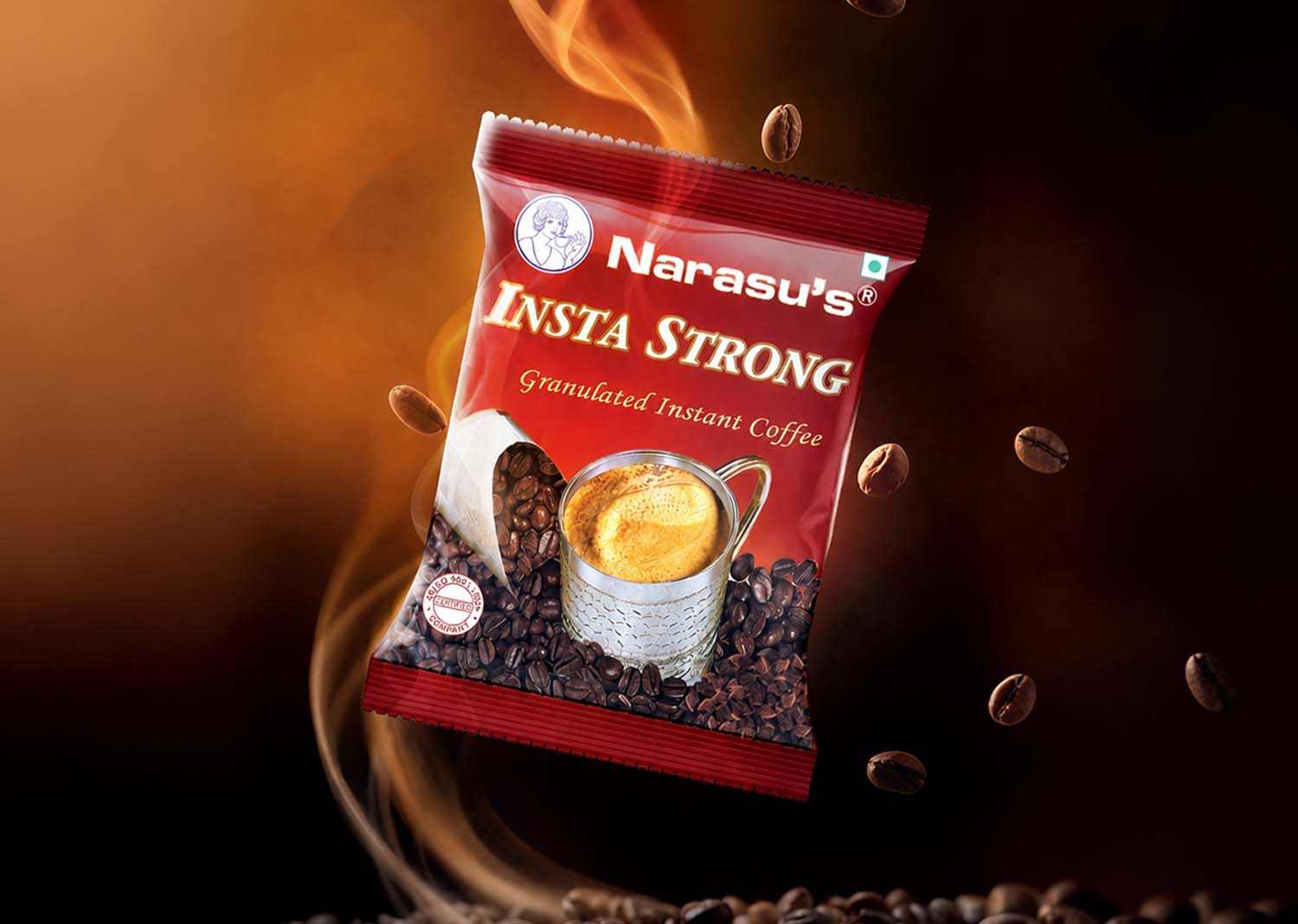
For those who need the convenience of instant preparation without completely sacrificing South Indian taste, the chicory ratio in the powder becomes the most important variable. Narasu's Insta Strong instant coffee powder, built around a 70:30 coffee-to-chicory ratio, is specifically designed to deliver bold, authentic South Indian flavour with the speed and simplicity of instant preparation. The best coffee brand in South India has ensured that even the instant format carries the character of a traditional cup.
How Does the Chicory Ratio Change the Experience Across All Three Formats?
Chicory is an ingredient unique to South Indian coffee culture and it plays a different role depending on the format in which it is used. In filter coffee, chicory deepens the colour of the decoction, adds body, and introduces a mild bitterness that balances the natural acidity of the beans. In instant coffee, the chicory ratio directly determines the strength and intensity of the final cup.
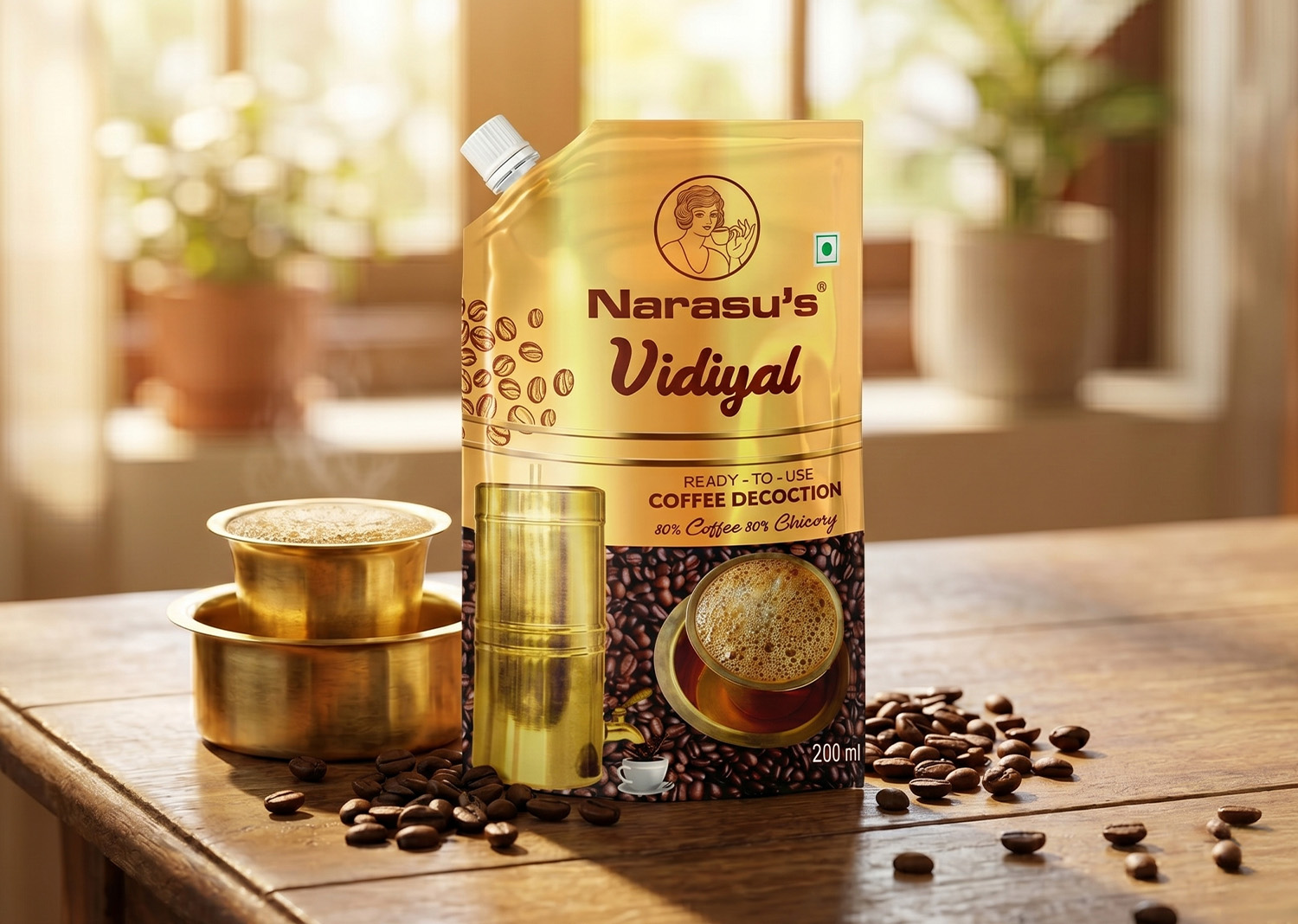
A ratio of 80:20 coffee to chicory produces the most traditional, full-bodied South Indian decoction. This is the ratio used in Narasu's Vidiyal instant coffee decoction, which is available in a ready-to-use format that eliminates the brewing process entirely while delivering the authentic taste of a traditionally brewed cup.
For those who want more intensity without switching to a full espresso-style format, a 70:30 ratio like the one in Narasu's Insta Strong instant coffee powder provides a noticeably bolder cup that still carries the characteristic South Indian balance of coffee and chicory.
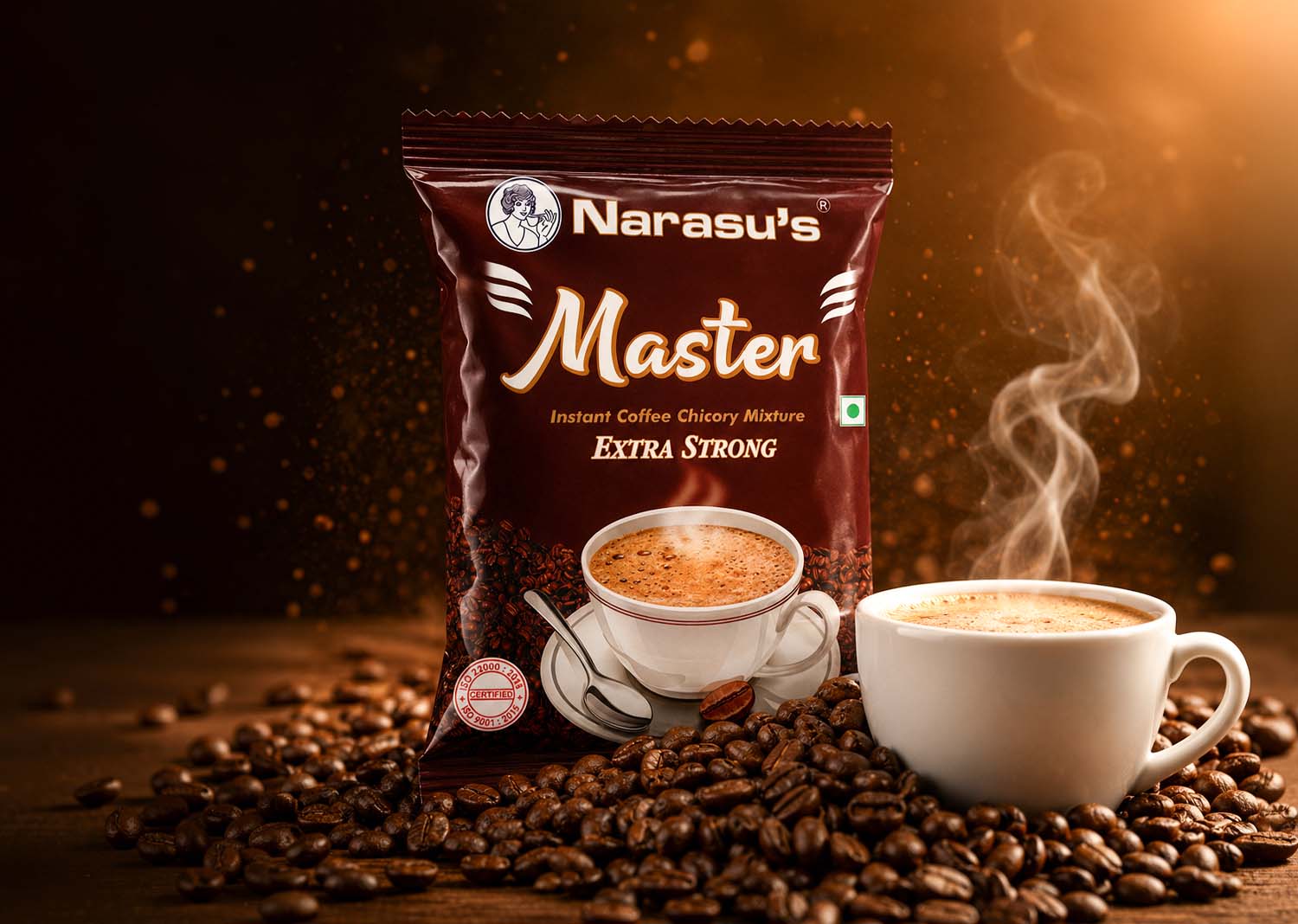
For maximum strength, a 57:43 ratio pushes the chicory concentration to its highest practical level while retaining the essential coffee character. Narasu's Master Extra Strong is built around this ratio for drinkers who want the boldest possible cup without compromise. According to food scientists, chicory at this concentration also contributes inulin, a natural prebiotic fibre that supports gut health and digestion.
The best coffee brand in South India has carefully calibrated each of these ratios to serve a different kind of coffee drinker without ever compromising on the quality of the base ingredients.
Why Does South Indian Filter Coffee Remain Culturally Irreplaceable?
Espresso has global recognition. Instant coffee has unmatched convenience. Yet South Indian filter coffee continues to hold a unique position that neither of these formats can fully replace. The reason is not just taste. It is the entire experience surrounding the cup.
The ritual of placing the coffee powder in the filter, waiting for the decoction to drip, boiling the milk, mixing it in the right proportion, and serving it in a traditional tumbler and davara is not simply a brewing method. It is a daily cultural practice that connects generations of South Indian households to a shared identity.
The slow drip method also produces a cup that is gentler on the stomach than espresso. The longer extraction time at lower pressure draws out the flavours without the aggressive extraction that espresso achieves under pressure. This makes filter coffee a more forgiving and sustainable daily beverage for most people.
You can explore more about what makes this cup so distinctive in our blog on Why Narasu's Coffee Tastes So Good, which goes deeper into the sensory and cultural dimensions of South Indian filter coffee.
Which Format Should You Choose for Your Daily Cup?
The answer depends entirely on your lifestyle, your taste preference, and how much time you have in the morning. Each format serves a genuinely different need and understanding that difference helps you make a better choice.
If you value tradition, enjoy the ritual of brewing, and have 15 to 20 minutes in the morning, South Indian filter coffee brewed with a quality powder is the most rewarding option. The cup it produces is fuller, more aromatic, and more culturally connected than anything else on the market.
If your mornings are tight but you refuse to compromise on South Indian flavour, a well-formulated instant coffee powder with the right chicory ratio is a practical middle ground. It delivers a recognisable taste in under a minute without the equipment or the wait.
If you want the convenience of instant preparation but the authenticity of a traditionally brewed decoction, a ready-to-use filter coffee decoction removes every variable from the process and gives you a consistent, authentic South Indian cup with nothing more than a pour and a mix with hot milk.
The best coffee brand in South India has built products for every one of these scenarios without ever treating convenience as an excuse to reduce quality.
Conclusion
Filter coffee, espresso and instant coffee each represent a completely different philosophy of extraction, convenience and cultural purpose. Understanding what actually changes between them helps you appreciate why South Indian filter coffee occupies such a distinct and irreplaceable position in the broader coffee landscape.
Whether you prefer the slow ritual of a traditionally brewed decoction, the bold convenience of an instant powder, or the effortless authenticity of a ready-to-use format, the best coffee brand in South India has built a product for exactly your preference. Narasu's has spent nearly a century ensuring that no matter which format you choose, the quality and character of the cup never changes.
Bring home the format that fits your morning. Order Narasu's today and experience the difference that a century of craft makes in every single cup.
FAQ Section
Q1. What is the main difference between filter coffee and espresso?
Filter coffee uses gravity and a slow drip process over 10 to 20 minutes to produce a large, mild, flavourful cup. Espresso uses high pressure to extract a small, concentrated shot in under 30 seconds. The grind size, brewing time and final volume are completely different between the two methods.
Q2. Is instant coffee as good as filter coffee?
Instant coffee offers convenience that filter coffee cannot match but it sacrifices some of the aromatic complexity of a freshly brewed cup. A well-formulated instant coffee powder with the right chicory ratio can come very close to South Indian filter coffee taste, especially when mixed with hot milk in the correct proportion.
Q3. What chicory ratio is best for South Indian filter coffee?
The 80:20 coffee-to-chicory ratio is the most popular starting point for a classic South Indian cup. A 70:30 ratio delivers more intensity, while a 57:43 ratio produces the boldest possible decoction for those who want maximum strength without losing the essential coffee character.
Q4. Why does South Indian filter coffee taste different from espresso even with the same beans?
The brewing method changes everything. Filter coffee extracts slowly under gravity at a lower temperature, producing a gentler, more balanced cup. Espresso extracts under high pressure in seconds, concentrating the flavours and creating a much more intense shot. The same beans produce fundamentally different results depending on the method used.

1771819270.jpg)
1771822569.jpg)