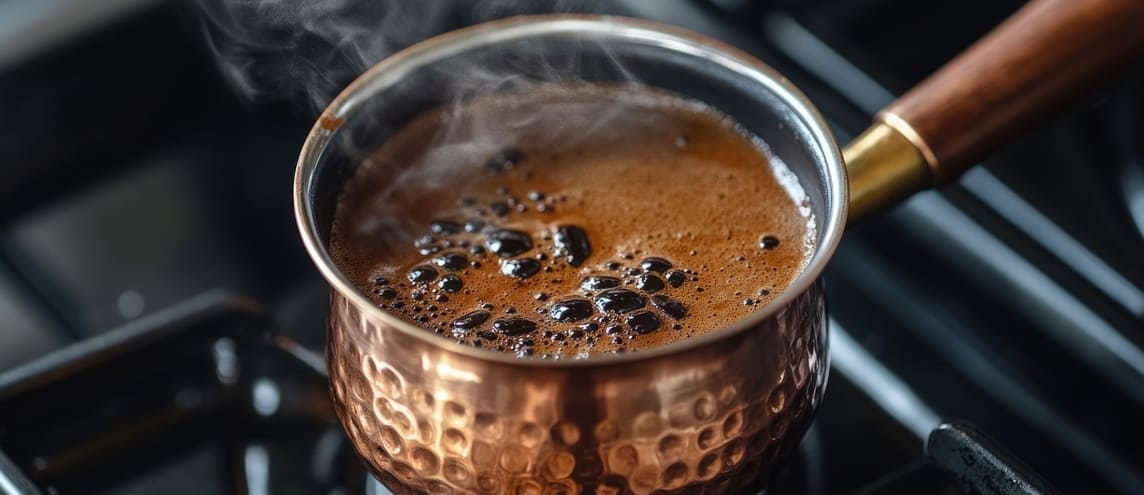
Brew It Right.
Guide to make the Best south Indian Filter Coffee
Summary
Making South Indian filter coffee at home sounds simple but getting it right every time requires the correct coffee powder, the right chicory ratio, and a precise brewing method. This guide walks you through every step to help you brew a perfect cup consistently.
Introduction
Have you ever brewed filter coffee at home and wondered why it never quite matches the cup you get at a good restaurant or from your grandmother's kitchen? The answer is almost always in the details. The best coffee brand in South India will tell you that a perfect cup depends on three things: the right coffee powder, the correct ratio, and a disciplined brewing method.
In this guide you will learn exactly how to brew South Indian filter coffee at home, what ratios work best for different taste preferences, and how to get a consistent result every single time.
What Equipment Do You Need to Brew South Indian Filter Coffee?
You do not need expensive machines or complicated tools to brew authentic South Indian filter coffee. All you need is a traditional stainless steel coffee filter, which consists of two cylindrical chambers, a pressing disc, and a lid.
The upper chamber holds the coffee powder and has small perforations at the bottom through which the decoction drips slowly into the lower chamber. This slow drip process is what gives South Indian filter coffee its characteristic strength and depth.
If you do not own a traditional filter, a ready-to-use decoction is a practical alternative that skips the brewing process entirely without compromising on authenticity. For those who want the full traditional experience, the steel filter remains the gold standard.
Coffee professionals suggest choosing a filter size that matches your daily requirement. A small filter typically yields enough decoction for two cups, while a larger one can serve four to six people comfortably.
Which Coffee Powder and Ratio Should You Use?
This step is where most home brewers go wrong. The coffee-to-chicory ratio determines the strength, colour, body, and overall character of your decoction. Choosing the wrong ratio for your taste preference will result in a cup that either feels too flat or overwhelmingly bitter.
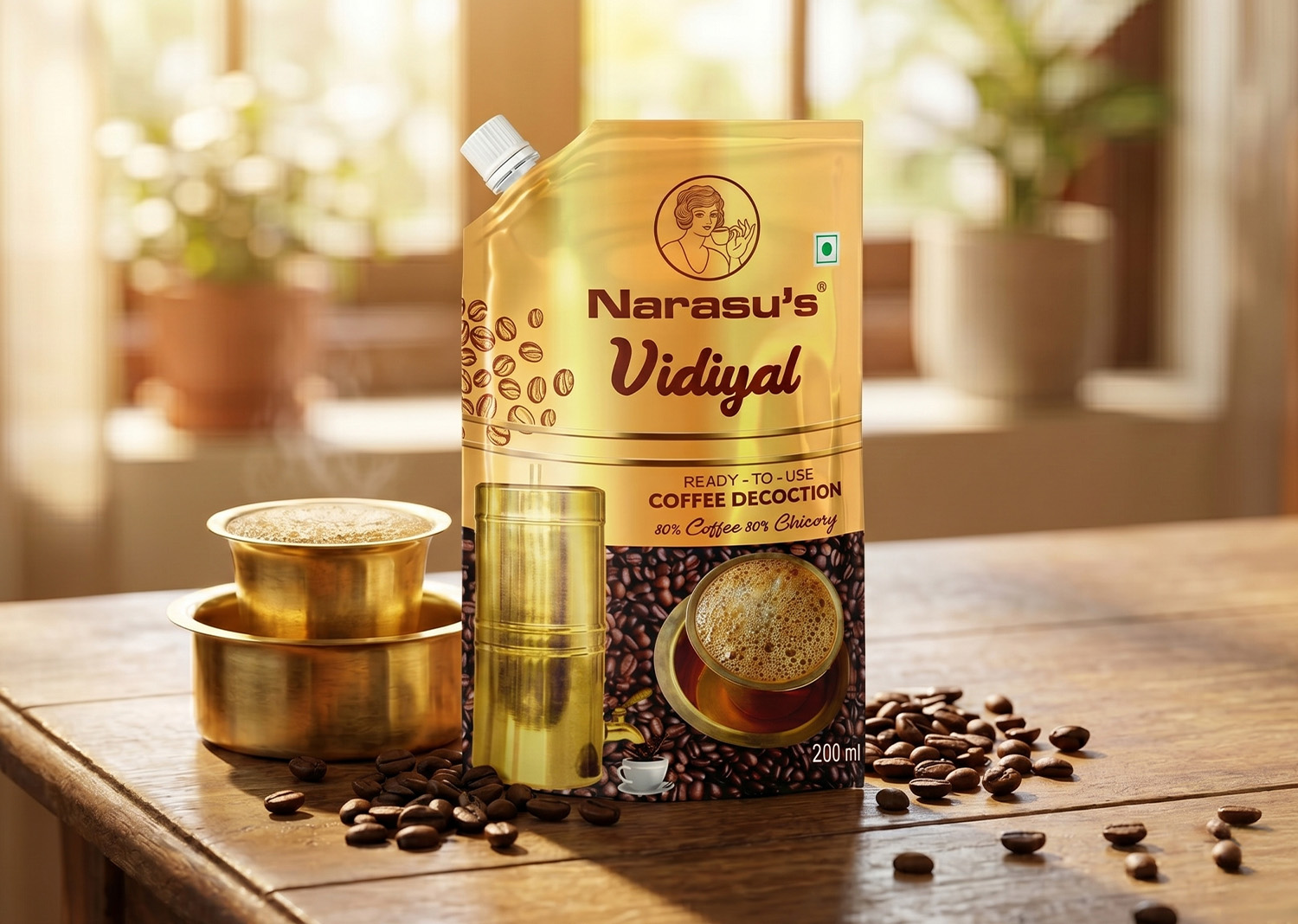
For a classic, full-bodied South Indian cup, an 80:20 ratio of coffee to chicory is the most widely preferred starting point. It delivers a rich, dark decoction with a balanced bitterness that pairs beautifully with hot milk. Narasu's Vidiyal filter coffee decoction, available in a ready-to-use format, is built around this 80:20 ratio for those who want authentic taste without the brewing effort.
If you prefer a stronger, more intense cup, a 70:30 ratio pushes the chicory slightly higher while maintaining the coffee's core character. Narasu's Insta Strong instant coffee powder follows this 70:30 ratio, making it a reliable choice for those who want bold flavour with quick preparation.
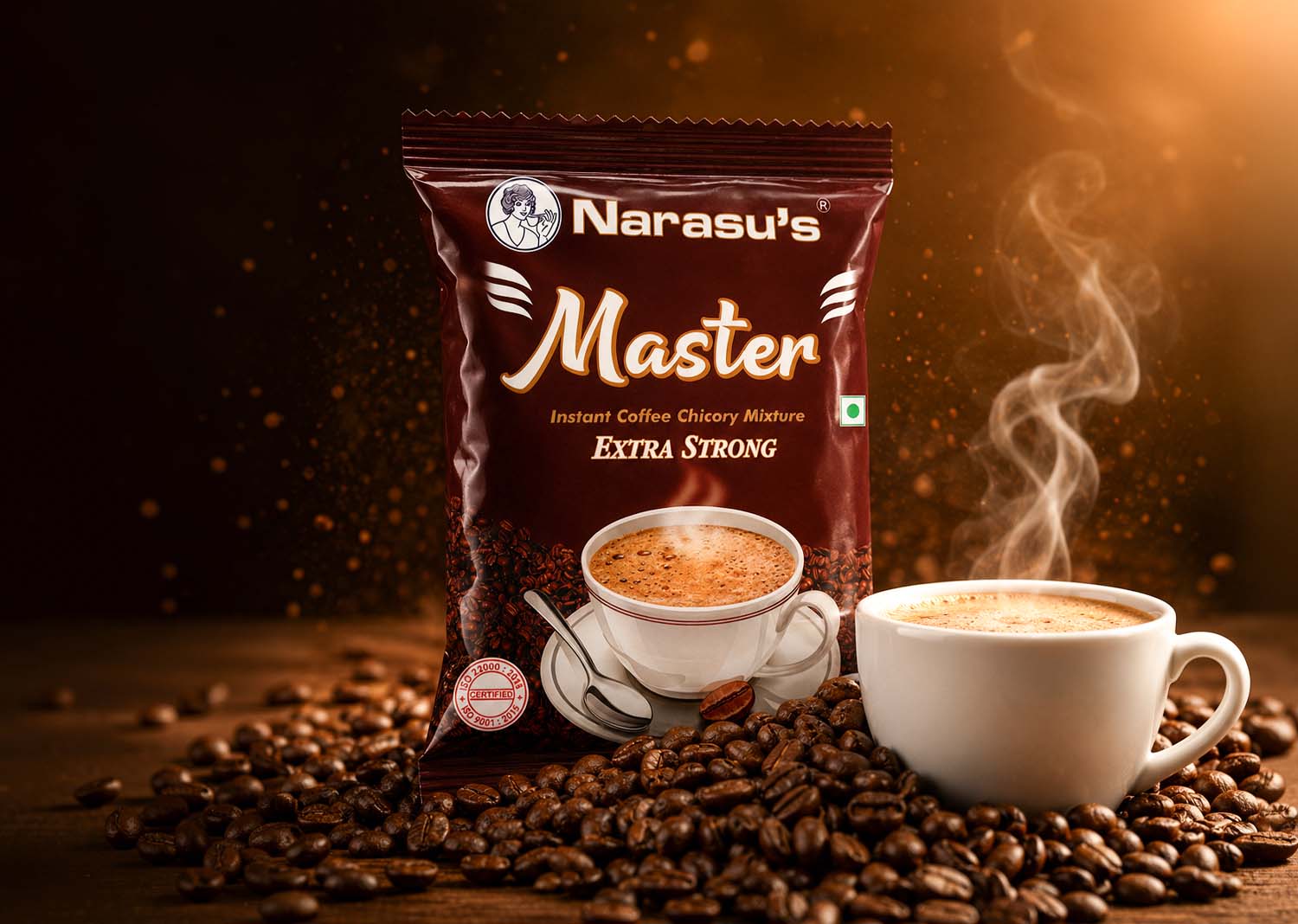
For maximum strength, a 57:43 ratio delivers the highest chicory concentration while still retaining the essential coffee character. Narasu's Master Extra Strong is crafted around this ratio, designed specifically for those who want a deeply intense, no-compromise cup every single morning.
According to experts in South Indian coffee culture, matching your ratio to your personal taste preference is the single most important decision you will make before brewing.
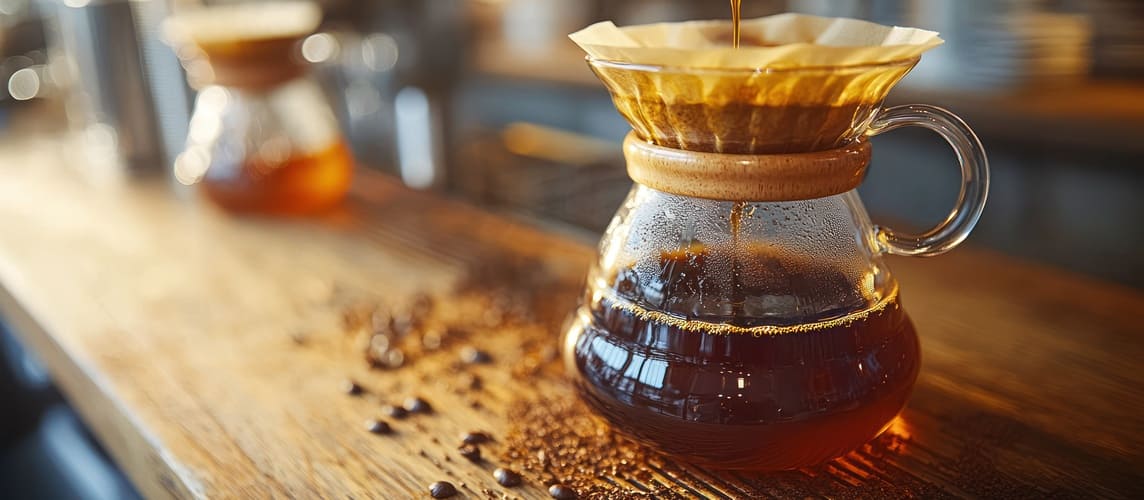
How Do You Brew the Perfect Decoction Step by Step?
Once you have your coffee powder and filter ready, the brewing process itself is straightforward. The key is consistency in every step.
Start by assembling your filter and placing it on a cup or container. Add two to three tablespoons of coffee powder into the upper chamber. The exact quantity depends on how strong you want your decoction. Press the powder gently using the pressing disc but do not compact it too hard. Over-compressing restricts the flow and produces a weaker, uneven extraction.
Pour hot water that is just off the boil, around 90 to 95 degrees Celsius, slowly over the pressed powder. Fill the upper chamber close to the top and place the lid. Allow the decoction to drip naturally into the lower chamber. This process typically takes between 10 and 20 minutes depending on the grind size and the compactness of the powder.
Studies in coffee extraction suggest that patience during this drip phase is critical. Rushing the process by using boiling water or pressing the powder too loosely results in weak, watery decoction that lacks depth.
If you are using Narasu's Vidiyal ready-to-use decoction, you can skip all of these steps entirely. Simply pour the required amount directly into your cup and add hot milk to taste.
How Do You Mix the Decoction with Milk for the Perfect Cup?
The decoction on its own is extremely concentrated and not meant to be consumed directly. It needs to be combined with hot milk in the right proportion to produce the final cup.
A standard starting point is one part decoction to three parts milk. If you prefer a stronger cup, increase the decoction slightly. If you prefer a milder taste, reduce it. The milk should be heated to a near-boil and frothed slightly if possible, as this improves the texture and overall experience significantly.
The traditional method of serving South Indian filter coffee involves pouring the mixed cup back and forth between the tumbler and the davara to create a light froth and cool it to a drinkable temperature. This aerating process is not just ceremonial. It genuinely improves the flavour by integrating the decoction and milk more thoroughly.
You can read more about the history and culture behind this brewing tradition in our blog on What Makes Narasu's the Best Coffee Brand in South India, which covers the deeper story behind every cup.
Add sugar to taste, though many experienced filter coffee drinkers prefer to reduce sugar over time to fully appreciate the natural bitterness and complexity of a well-brewed decoction.
Conclusion
Brewing the perfect South Indian filter coffee at home is not complicated but it does require attention to the right details. The coffee powder you choose, the ratio of coffee to chicory, the water temperature, the drip time, and the way you mix with milk all contribute to the final cup.
Whether you prefer the bold intensity of a 57:43 blend, the balanced strength of a 70:30 ratio, or the classic richness of an 80:20 decoction, there is a Narasu's option built precisely for your preference. As the best coffee brand in South India with a legacy stretching back to 1926, Narasu's has spent nearly a century perfecting exactly what goes into your cup.
Bring home the craft of authentic South Indian filter coffee. Order Narasu's today and brew a cup that truly gets it right every single time.
FAQ Section
Q1. How much coffee powder should I use for one cup of filter coffee?
Two to three tablespoons of coffee powder is the standard measure for one strong cup of decoction. Adjust slightly based on your preferred strength. A consistent measure every time is key to getting a repeatable result from your filter.
Q2. What is the best coffee-to-chicory ratio for South Indian filter coffee?
The 80:20 ratio is the most popular starting point for a classic South Indian cup. For more intensity, a 70:30 ratio works well. For maximum strength, a 57:43 ratio delivers the boldest possible decoction without losing the essential coffee character.
Q3. Can I use instant coffee powder to make filter style coffee at home?
Yes. A good quality instant coffee powder with the right chicory ratio can deliver a very close approximation of filter coffee taste, especially when mixed with hot milk in the correct proportion. It is a practical option for busy mornings when brewing time is limited.
Q4. What temperature should the water be for brewing filter coffee decoction?
Water at around 90 to 95 degrees Celsius works best. Water that is fully boiling can over-extract the powder and introduce unwanted bitterness. Letting boiled water rest for 30 seconds before pouring gives you the right temperature range consistently.

1771819270.jpg)
1771822569.jpg)